Thursday, May 14, 2009

Quote of the day


These apt words were uttered by one of the most profound women in history.

Today, I'm posting them as a shout-out to all the animal rescuers out there who can't turn their eyes away when they see a creature suffering. Even at their own peril.

In a line of work mottled by failures, it would be easier to give up. There are days when the endless cruelty sickens the soul and make you feel helpless. Like you aren't making a difference.

For the rescuers having a hard time today, and one in particular (you know who you are), I hope your heart finds peace and comfort. The animals thank you for everything you do for them. You make the world a gentler place.

"Many persons have the wrong idea of what constitutes true happiness. It is not attained through self-gratification but through fidelity to a worthy purpose."


- Helen Keller

Wednesday, May 13, 2009

The power of paws-itive thinking

Pongo sits graciously as he receives his Woof and Whiskers award.


A teacher who has integrated animals into her curriculum to inspire her fifth-grade class. A dog working in mental health. A pig sanctuary where the residents have no fears of being turned into tomorrow's breakfast bacon.

The animal community honors its heroes just like any other: with awards ceremonies. And last week, I attended Whatcom Humane Society's version called Woof & Whiskers, in northern Washington State. Its mandate is to recognize local individuals, businesses and animals who have gone above and beyond the paw of duty to help animals.

This was the 7th annual. Every year I'm inspired meeting people out there who gathered their own creative momentum to make life better for the animals.

"This is my favorite event," WHS executive director Penny Cistaro told the crowd, which included veterinarians, shelter workers, rescue groups, and other animal lovers. "It's wonderful to be surrounded by like-minded people."

And animals.

As inevitably happens when an animal arrives on the scene, Pongo was the star of the show. The Delta Society-certified dog won the animals are kind to people award. He's done his share of work to be proud of: he's served for children as a reading dog, and visited patients in hospitals and nursing homes.

Then there's his most challenging work to date -- crisis response. The four-year-old is a first responder for people who have survived a traumatic event. Pongo arrives on the scene to provide his special brand of canine care and comfort.

The official designation he uses is FMHS -- Furry Mental Health Specialist.

His first trip was to a university in Illinois, where six people were shot dead. Locally, he helped the Red Cross with a shooting in Algiers last fall, and attended to a second grade class in Lynden. He comforted the children because a classmate had died.

Pongo's calm and competent demeanor kindles peace in the minds of his patients.

"You go home and look at your own dog and say, ‘Why can't you be more like Pongo?'" joked WHS outreach director Laura Clark. "This dog has a work schedule that rivals most CEOs'."

The humans who picked up awards included politicians, veterinarians and journalists.

Government leaders are recognized each year, and this time it was the city of Ferndale that received kudos for putting more teeth into local animal laws and ordinances. Mayor Gary Jensen accepted the public service award.

And a schoolteacher known for integrating humane education into her curriculum arrived with a small parade in tow -- her entire fifth-grade class! Each child proudly stepped up to the microphone in turn and gave an acceptance speech for the kids are kind to animals award as Kendall Elementary schoolteacher Judy Davis stood by beaming.

Veterinary clinics always figure prominently, such as Village Veterinary Hospital, which won for treating neglected exotic birds who were rescued from a hoarding house. Steps taken to curb overpopulation were also recognized, such as Mountain Veterinary Hospital for providing free spay-neuter surgeries to clients who commit to a vaccination series. And the WeSnip program, for giving low-cost spay-neuter surgeries to more than 1,300 animals in Whatcom and Skagit counties.

A place called Pigs Peace Sanctuary was the winner that intrigued me the most. Two hundred pigs hanging out on a 34-acre sanctuary in Stanwood featuring ponds and walking trails.

The media award went to a cub reporter from the Bellingham Herald named Isabelle Dills. She's been chasing animal stories for the paper, something most mainstream media can't be bothered to do. Congratulations, Isabelle! Keep up the great work on the fuzz beat.

Oh, and I got one, too. I was honored and touched to receive the act of kindness award, for writing stories about shelter workers and other front-lines animal rescuers. The stories discuss compassion fatigue, euthanasia, and other challenges rescuers face.

Penny presented the award to me with a speech that brought tears to my eyes. The tender moment was bittersweet because it's Penny's last Woof and Whiskers -- she's taken a job in California, and will be leaving town in a couple of weeks. It was Penny who first opened my eyes eight years ago to the reality faced by open-admission shelters when I brought a feral cat in to her to be spayed. I can't imagine this place without her. We'll miss her terribly, but our loss will be a gain to the animals of Sacramento.

I'm not satisfied I've got the full scoop, so I'm going to keep following these stories of animal lovers in action. Next week, I'm headed to Kendall School to see the humane education program. And I'm going to get over to the pig sanctuary soon, too. From what I'm hearing, it's a paradise for pigs like no other.


Pongo, unchanged by stardom, ponders his acceptance speech.

How vegetarians get bird flu

Photo courtesy of Cyndi Bennett, Northern Design.


I couldn't resist! : )

The eagle has flown the nest

I'm always finding these little cocoons around the house. A cat built it for a nap, then crawled out and went on to do something else. Perhaps have a nibble of food or lay in a sunbeam.


I found this photo in my files. Could this be the innovative nest-builder?

Field of cows: if you don’t eat them, they will come

When I came across these bison last week, I thought I'd repeat my impromptu cow pasture party. But the keepers of these animals gave me a stern warning: I would be trampled in short order if I tried it. Particularly since a new baby had been born the day before.


I was driving along a Washington State country road when I spotted a pasture dotted with grazing cows. And a wild impulse struck me.

I pulled my car over to the side, jumped out and ran towards the fence that contained the lowing beasts. Sprinting a short distance into the field, I spread my arms wide and cried out: "Come to me, cows! Come on over. You're safe with me. I'm a vegetarian!"

And lowing behold, one by one their heads began to turn my way. Slowly they started trudging in my direction. Before long, about 50 cows had formed a circle around me. They even left a comfortable safety zone, a six-foot radius that allowed me to stand amidst them.

I was surrounded by a sea of wet noses and big brown eyes and soft velvety fur. The occasional "moo-oo-oo" floated above the crowd, but other than that, the gathering was quiet.

We stood there for a few moments, taking each other in -- majestic, powerful beasts versus a wimpy, curious human being. They could have crushed me if they wanted to, but their gentle nature caused them to come over and greet me instead.

Then, sensing it was time for us to part ways, the cows began dispersing with their slow, determined gait. A few lingered behind, and I rubbed their noses before saying goodbye.

Apparently this animal looks much more easy-going than he actually is.

Sunday, May 10, 2009

Miracles come in small packages


Miracle is a Dachshund-Yorkie mix.

When police descended on a Whatcom County house to seize 50 neglected animals, the hoarders living inside were issued a strict directive as their dogs, cats, ducklings, and exotic pheasants were being carted away.

No more animals.

But hoarders have a 100 percent rate of recidivism. They always re-offend. And when these ones heard the sheriff's department was coming back to check up on them, they knew they were in trouble.

They had already obtained a mother dog and her three six-week-old puppies. Now they had to dispose of the evidence.

On another property belonging to the hoarders, police discovered the ditched pet carriers in a bramble patch. Inside were four tiny bodies. Their throats had been slit, and they had been abandoned there to bleed to death.

For two days, little Miracle had laid there clinging to life beside her dead mother in the bloodied plastic carrier.

Miracle made a full recovery at Whatcom Humane Society, where outreach director Laura Clark speculates that she might have survived because she was last in line. If so, the blade was likely dull by the time the killers reached her.

Miracle -- who is called Mira for short -- made a full recovery, and shows her spunky side by tearing around the grass like she's airborne.

Probably because of her traumatic experiences, she doesn't like to be crated. The only physical remnant of her ordeal is the occasional cough from damage sustained to her trachea. She loves people and other dogs, especially an English Labrador named Kobe who lives next door.


After she was rescued, Miracle recovered from her ordeal at the Whatcom Humane Society.


Miracle is a little pup with big-dog confidence. Zachary isn't phased by her bravado.

Does humanity have a price tag?

Photo courtesy of Nigel Barker.


I'm starting to get pretty sick and tired of debating the nonsensical economics of the Atlantic Canadian seal slaughter.

Yes, it's true the seal hunters make a miniscule amount of money on the pelts they cut off the baby seals, who are still alive when they do it half the time.

And it's true that the Canadian government spends many millions of your taxpayer dollars to keep this money-losing industry propped up, while the world grows increasingly intolerant of the cruel annual ritual of smashing in 300,000 baby seal heads.

But despite all the economic arguments that spell out how much we spend -- not make -- to hold the title for the largest slaughter of marine mammals on earth, I'm left wondering about something.

Does it even matter whether this sadistic blood sport earns us any money or not?

If Canadians could make $15 a head beating cats and dogs to death with spiked clubs, we wouldn't embrace the activity as a creative way to make money. Just like our family pets, seals are sentient beings capable of feeling pain and anguish. They are animals deserving of our compassion and humanity.

When I was at an information event for saving the seals recently, I asked senior researcher Sheryl Fink of the International Fund for Animal Welfare about the mentality of the fishermen who kill them. Fink has been out on the ice viewing the slaughter every spring for about eight years. By law, observers are allowed to get within 10 meters of the sealers. It's a grisly scene she likened to an "open-air abattoir."

"You can hear the men singing, whistling and joking," Fink said. "Last time I went they were singing Jingle Bell Rock. You can hear the wet thud of the hakapik as it hits the seals' skulls. The smell out there is unique. It's a mix of blood, diesel fuel from the boats, and cigarette smoke."

Fink described the breathtaking sight of the newborn seals moving about the ice as they learn their way in the world, wriggling right up to the human beings who are there to slaughter them.

"They're like puppies sitting there chewing on pieces of snow. I've asked the men -- don't you ever enjoy just watching this? They say no, that all they see lying there is a $20 bill."

DO YOU WANT TO HELP SAVE BABY SEALS?

Click on these links to get involved.

International Fund for Animal Welfare

www.stopthesealhunt.ca

www.protectseals.org

You can also send an email of support to Mac Harb, the only Canadian parliamentarian courageous enough to put forward a bill to stop this atrocity that is a global embarassment to our kind and peaceful nation. Mac is taking the letters, emails and petitions -- all 518,000 of them -- to Prime Minister Stephen Harper's office by the wheelbarrow load.

Email the Senator at harbsealbill@sen.parl.gc.ca

Saturday, May 9, 2009

A year’s worth of second-look beauties

WHS executive director Penny Cistaro attempts to corral a skittish Arabian horse so we can photograph her. Red was emaciated and neglected when she was seized by the shelter, so she panics when people come over, fearing she will be taken away.


For the past six springs, I've hit the road for a week interviewing animals with death-defying survival stories. The project showcases Whatcom Humane Society's successes -- 12 animals who beat the odds.

Here's the best part: it gives me the chance to write about happy endings. In our business, there are never enough of those.

This week I've been interviewing dogs, cats, and horses. Fuzzy yellow ducklings, mischievous goats, and even charging buffalo have made cameo appearances.

I admit it. Despite our animal handling experience, the shoots don't usually go smoothly. The ones selected to model the days of a month aren't aware that fame comes at a price -- the invasion of their privacy. And for those with backgrounds dominated by neglect or cruelty, they are often uncomfortable meeting new people. Particularly those of us sticking cameras in their faces.

My job is to lure the guardians away from the animals by asking questions. Then WHS executive director Penny Cistaro helps pose the pets for the photographer. Chasing them around houses and yards to get a good shot is standard protocol.

There are always animals who make us laugh at their antics, and those who make us cry for their stories.

I'll let the photos tell the rest.


Shelter director Penny Cistaro and photographer Steven Kennedy help Bandit pose for his moment of fame. This cat was living in a filthy cage in the back of a moving van at a Wal-Mart parking lot when he was taken in by the shelter.


Emma was dropped off at a gas station when she was six months old with a note attached from her family saying they couldn't take care of her anymore.


It was plain that Roberta -- a hoarder house survivor -- had a fiery personality when she rocked up for her shoot. Her cage was marked "I bite." She stayed true to her cantankerous image by dive-bombing us. Her new guardian Rick Reed used to hunt birds until he realized their charms. "I don't care to kill birds anymore," said Rick, who now keeps 15 of them as pets.


A stallion named Moxie breaks into a gallop with his pal Barney. So much for that close-up shot!

Friday, May 8, 2009

Ranch kid viewed cows as pets, not steaks

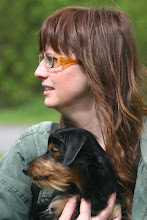
Cyndi Bennett (on right) has always been enamored with animals.


To this day, Cyndi Bennett despises shopping.

That's how her mother coaxed her away from the family's ranch when it was time to slaughter the cows each week.

Finally her father tried to put an end to Cyndi pleading for their lives.

"If you can name all the cows in the herd, I won't slaughter any of them this week," her dad told her.

There were 300 of them.

That didn't deter the fifth grader. She set up a computer spreadsheet noting all the cow's ear tags alongside the names she had given them.

When the time came, Cyndi was ready. One by one, her father pointed to a cow or yelled out an ear tag number. Cyndi recited each name from memory.

"No cows died that week," she said. "And that's why I hate shopping to this day -- because it reminds me of my mom taking me away so I wouldn't see the cows being slaughtered."

There was one cow who always escaped the table, though. Bessie was Cyndi's favorite, and became a family pet.


Northern Design owner and photographer Cyndi Bennett and I were out on a shoot together this week when we came across this St. Bernard named Barney who loves the ducklings growing up at his house. When the ducks come out to roam, Barney follows them around the yard with utter fascination and focus.


Cyndi cuddles Emma, a Whatcom Humane Society calendar hero.

Thursday, May 7, 2009

Canadian politicians want their pet blood sport represented at Olympics

Photo courtesy of Nigel Barker

Unwanted pelts are piling up in dumpsters and getting tossed onto burn piles as markets around the world are closing to the trafficking of slaughtered baby seals.

On Tuesday, the European Union's 27 member countries voted to ban the import and sale of seal products. It was a landslide -- 550 were for the ban and 49 went against. There were 41 abstentions. Add these EU countries to a long list of others including Slovenia, Croatia, Mexico and Russia.

But instead of finally hearing the voice of the world -- and its own citizens -- who are speaking out against subsidized cruelty, Canada's Members of Parliament have come up with their own bizarre response to the ban. Just when I thought it couldn't get more ridiculous, MPs from all parties voted unanimously yesterday in favor of a Bloc Quebecois motion to integrate seal pelts into uniforms for the Canadian athletes.

Just picture it: our Olympic athletes out there draped in sealskin, leaping around the parallel bars and rounding the race tracks with fur flying. Not exactly the moment of patriotic pride we should be striving for.

"With the upcoming Winter Olympics that will be in Vancouver in 2010, the government has a chance to offer some concrete action to promote seal products," Bloc Quebecois MP Raynald Blais said.

That will allow them to use up a few of those unwanted pelts while thumbing their noses at the European Union, a block of countries we are currently negotiating with to increase free trade. The trade dealings are potentially worth billions in wealth to Canadians.

All that to save a dying industry that costs taxpayers millions annually.

Still, Canadian Olympic Committee president Mike Chambers said the idea of sealskin uniforms isn't going to take flight. It will hinder the performance of the athletes and politicize the event.

"I'm used to those in the political arena wishing to attach their issues to the Olympic arena," he said. "But this is one...that will not and cannot be allowed to occur. It's our intent for our athletes to remain free of the politics that arises in and around the Olympic Games. The seal issue, while important, is an issue that has become politicized."

Clearly it's political, because it isn't economical.

And at a time of celebration when our athletes are serving as role models for our nation, we shouldn't be branding them with this badge of cruelty.

Even if it is made of sealskin.

Wednesday, May 6, 2009

Mac fights to keep Harb Seal Bill from being iced

Mingling after his speech in Vancouver, Mac Harb stops to talk to Jason Windtalker, an aboriginal who is appalled by the reckless slaughter of innocent marine mammals.


If they are to survive public life, career politicians must grow a hard shell.

But even 25 years in politics didn't prepare Senator Mac Harb for the backlash he endured from his peers when he introduced a private members' bill on March 3. It proposed to end the massive annual slaughter of baby seals on Atlantic Canada's ice floes.

"I've never been abused so much in my life as when I introduced this bill," said Harb, who spoke to citizens this past Sunday at the Vancouver Art Gallery.

One senator -- former Vancouver mayor Larry Campbell -- has even taken to giving Harb a hand signal when they cross paths on Parliament Hill.

And it isn't exactly a thumbs-up.

Campbell twirls his finger around in a circle near his ear, inferring that Harb is crazy.

In an unprecedented show of disrespect, not one of Canada's 105 senators would second the Harb Seal Bill. A second motion is all that's required to allow Harb to speak about his bill in Parliament.

"If I couldn't find one [senator] with the courage to do that, then I had to take it back to the public," he said.

Harb is the first Canadian politician in history to officially propose an end to the annual seal slaughter. He first became interested in the issue from his experience traveling on trade delegations. He faced people around the world who viewed the killing of baby harp seals with repulsion and horror. And he watched millions being spent by the Canadian government to promote and support a dying industry in the face of worldwide opposition.

"We still call it a hunt," Harb said. "Frankly it's not a hunt at all. They can't walk, can't swim, can't fly. These are babies. Give them a fair shake. This is not a hunt. It's a slaughter."

Despite the ridicule he faces from fellow politicians, Harb isn't deterred from his mission. He's pressing ahead with gusto.

"The government is on the wrong side," Harb said. "They have developed a mental block on the issue. They just don't want to hear about it."

Harb says fear of losing Atlantic Canada's votes -- largely a region galvanized by the fishing industry -- has caused politicians to shy away from ending the slaughter once and for all. That logic doesn't make sense when it's settled against public opinion. While Harb's fellow politicians aren't giving him props, the public certainly is. Forget about being called crazy. "Hero" is the word being bandied about by animal lovers. Not a word typically used to describe politicians.

In all, a whopping 518,000 Canadians have called, written, or emailed Harb's office since he launched his campaign. They've sent letters of support, petitions, and words of encouragement. That's an impressive number in a country with a population of 30 million.

Harb is bringing the letters by the wheelbarrow load to Prime Minister Stephen Harper's office.

"We are going to see the beginning of the end of the commercial seal hunt," he declared.

The government computer system has been overwhelmed by the response from the public. Half of the Senate computers -- about fifty of them -- crashed as emails flooded in supporting the Harb Seal Bill. And the servers that handle internet traffic for the Senate and the House of Commons have crashed twice. Kids as young as four years old have written to Harb begging him to keep fighting for the seals.

"When the Government of Canada's computer system can't take the emails from the people, Parliament has to take note of that," Harb said.

As a Canadian, I am stunned by how out of step politicians are with the will of the people on this issue. Polls estimate that 80 percent of Canadians oppose the seal hunt. The exercise in government-subsidized cruelty churns the stomachs of most of us. And the barbaric annual ritual bloodies our public image worldwide.

Harb doesn't call himself an animal activist. He's not even a vegetarian. But he still "cannot understand for the life of me what the rationale is."

"How silly we are to allow this to continue. A loving, kind nation, and now we're killing baby seals," Harb told listeners, who at times gasped in shock as gruesome footage of the carnage on ice was screened. "I have letters from tourists who don't want to come here because all they think about is the seal hunt. It doesn't mesh well with the Canadian image."

The cruelty footage that played out on screen at Harb's event -- which was sponsored by the International Fund for Animal Welfare (IFAW) -- left me breathless. I've viewed the worst: puppy mills, torture, dog fighting. Still, I've never seen cruelty that rivaled this.

Despite his official stripes, Harb hasn't been given any professional courtesy. When he traveled to Eastern Canada this year, the government wouldn't even direct him to the site where the bloodbath on ice was occurring, despite its claims that peaceful observers are welcome. Yet elite government ice-breakers costing taxpayers $50,000 per day escort the seal killers to the places where the pups are innocently learning to swim and feed themselves.

Harb had to spend three and a half hours flying around in a helicopter with IFAW looking for the slaughter site before he found it.

"The government could have told me as a senator, as a courtesy," Harb said. "There are a lot more horrifying photos and videos than what you just saw. These images are the tip of the iceberg."

DO YOU WANT TO HELP SAVE BABY SEALS?

Click on these links to get involved.

International Fund for Animal Welfare

www.stopthesealhunt.ca

www.protectseals.org

Saturday, May 2, 2009

What if Stephen Harper was Stephen Harp Seal?

A two-week-old seal pup frolics on an ice floe. Photo courtesy of Nigel Barker.


Canada's Prime Minister is headed to Prague this week to kick off free trade negotiations with the European Union. If talks are successful, the country stands to gain billions in trade wealth.

But there's an obstacle blocking the way. The blood of baby harp seals threatens to rain on Stephen Harper's trade parade. The intense pressure from Europe -- and the world -- to end government-sanctioned animal cruelty is swelling to a crescendo.

This week, members of the European Parliament are expected to vote in favour of a law banning the import of seal products. It's a major strike against the sadistic seal slaughter that goes on for a few weeks every March and April on the remote ice floes in the Gulf of St. Lawrence.

The EU's seal vote is on Tuesday. Then on Wednesday, Harper is scheduled to launch the free trade talks at the Canada-EU annual summit. It's not exactly a dynamic public relations roll-out for Harper.

The inhumane nature of the hunt has been one of the most contentious issues between the two parties. In fact, the largest slaughter of marine mammals on Earth has caught the eye -- and the ire -- of many nations appalled by the barbaric ritual. More than a million baby seals have been beaten to death in Eastern Canada in the past four years.

The United States has been prohibiting seal products since 1972. And now Croatia, Slovenia, Austria, Germany, France, the Netherlands, Belgium, Italy, Panama and Mexico have either banned trade in seal products or announced their intentions to do so. In mid-March, Russian Prime Minister Vladimir Putin outlawed the hunting of baby harp seals in the White Sea region, labeling the hunt a "bloody business."

It's not just foreigners who disagree with the cruel blood sport. About 80 percent of Canadians oppose it too. Most are too sickened and horrified to watch the footage or hear the details. And many Canadians don't even know it still goes on. The hunt collapsed in the 1980s before being quietly re-introduced in the mid-90s, resurrected by government subsidies.

Many animal welfare groups won't even call the slaughter a "hunt" because there is no chase involved. The seal pups are still learning to swim and eat solid food. They lie on the ice, helpless and trusting until they are bludgeoned to death by young, strapping men with spiked clubs.

Veterinary studies have concluded that about half of the seals are still conscious when they are skinned alive.

About 90 percent of the men who participate in the commercial seal hunt are Newfoundland fishermen, and most are not aboriginals. And the ones who are aboriginal remain protected -- First Nations have been exempted from the proposed legislation.

Despite the will of its citizens' majority, Canada's federal government remains inexplicably defiant in its blind support of the grisly slaughter. According to a report in the Calgary Herald, Ottawa is monitoring the EU vote closely. If the ban on seal products passes, the government intends to challenge it under World Trade Organization rules, said Kory Teneycke, Stephen Harper's director of communications.

The seal hunt has already cost Canada hundreds of millions of dollars. In 2005, animal welfare groups formed the ProtectSeals campaign, whose main line of attack has been convincing American grocery stores and restaurants to boycott Canadian seafood exports, a $3-billion industry annually. The move is designed to attack the sealers' core income coming from their seafood catch.

The boycott has already cost Canadian businesses millions. Just the value of snow crab exports alone to the U.S. have declined $750 million since the ProtectSeals campaign began, and seafood exports from Newfoundland to the U.S. have dropped 44 percent according to the Humane Society of United States. HSUS is a major backer of the ProtectSeals campaign and one of the largest animal welfare organizations in the world.

Animal welfare groups aren't taking all the credit for the declines in seafood exports. Other economic factors are also at play. But since ProtectSeals started, it has successfully lobbied 5,000 American grocery stores and restaurants to stop carrying Canadian seafood, including popular chains such as Whole Foods and Trader Joe's. There's no doubt that ProtectSeals is having an impact.

By contrast, the take from the so-called hunt is miniscule. Last year, its gross revenues were $12 million, and typically at least half of that is eaten up by expenses. And with world markets for seal skins closing like dominoes, so have prices plunged -- to $15 per pelt from last year's $33. In 2008, the seal hunters took home about $1,100 each, a fraction of their annual income. This year, pelts are piling up unwanted in warehouses, and sealers will be lucky to break even.

The hunting lobby portrays sealers as poverty-stricken fishermen who need the revenue and the meat to feed their families, but the facts don't support these arguments. They aren't eating the meat. Footage documents hundreds of thousands of bloody carcasses left to bleed out on the ice.

Even those who don't care about animals should have something to say against the seal hunt, considering the millions it costs Canadians. A fleet of 10 government vehicles including ice breakers and helicopters assist sealers in getting to the remote ice floes for this dangerous, macho rite of passage. Last year, four sealers drowned, and another two almost died. The ensuing search and rescue took several days and cost the Coast Guard -- or should I say the taxpayers -- millions of dollars.

Still, Canadian politicians seem determined to sacrifice an ocean full of cash for what amounts to a bloody drop in the bucket.

Why?

Maybe Stephen Harper will have an answer to that when he faces the European Union on Wednesday.

Animal lovers the world over will be waiting to hear it.

DO YOU WANT TO HELP SAVE BABY SEALS?

Speaking out against the heartless killing of seal pups is easy, and your voice counts.

These links will propel you to action:

www.stopthesealhunt.ca

www.protectseals.org

A senator speaks about the Harb Seal Bill

Canadian Senator Mac Harb is the first parliamentarian in history to table a bill devoted to ending the seal slaughter. He has already received 30,000 letters of support at his office. Make yours one of them! You can bet he'll be riding that wave of public support all the way to Parliament Hill in Ottawa.

Email the Senator at harbsealbill@sen.parl.gc.ca

Senator Harb will be speaking at the Vancouver Art Gallery tomorrow. If you live nearby, drop in and show your support. I'll be there to interview him and blog the event.

The Vancouver Art Gallery
750 Hornby Street, Vancouver
Heritage Court Room (Second Floor)

The event will be on Sunday, May 3rd from 6:00 PM to 8:00 PM. Doors will open at 5:30 PM.